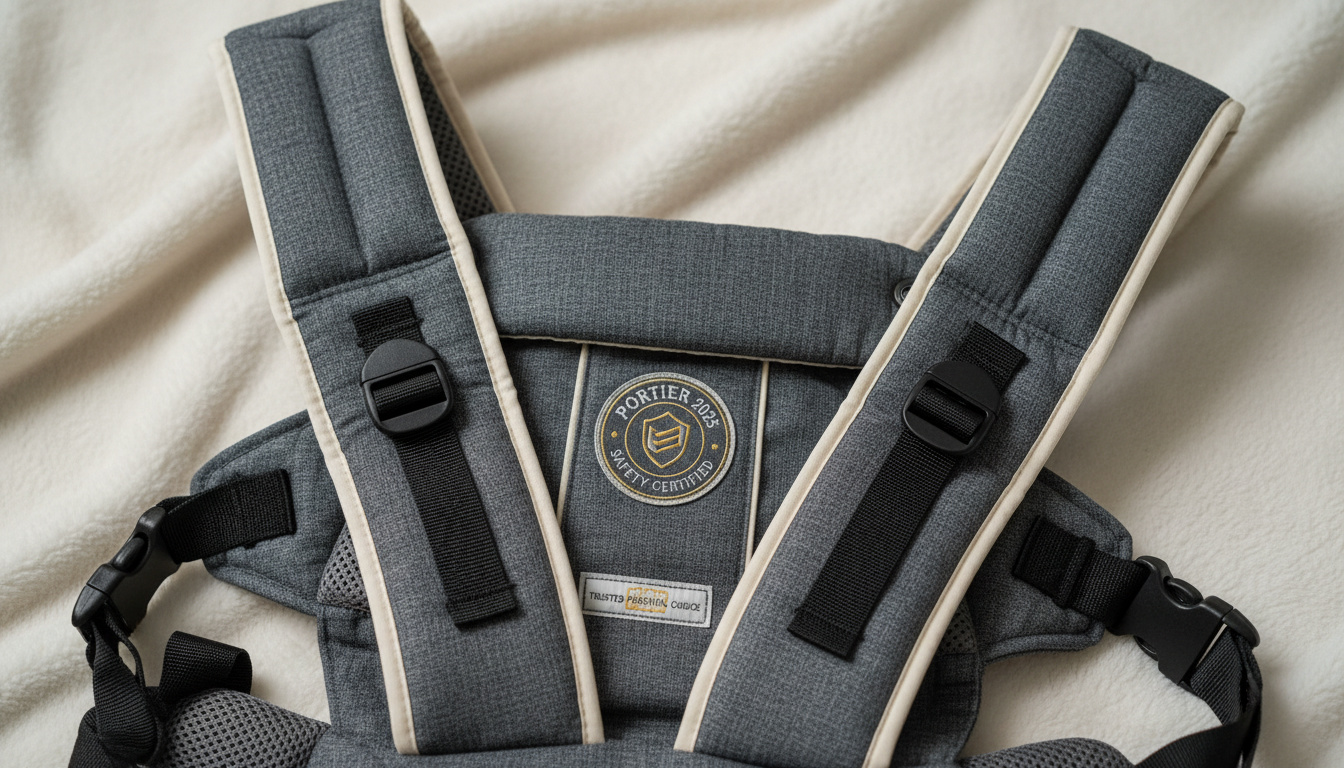
The Portier Limitless Baby Carrier enters the competitive babywearing market with specific certifications targeting safety-conscious parents. Designed for newborns as small as 3.2 kilograms and supporting children up to approximately 16 kilograms, this carrier emphasizes ergonomic positioning and certified hip-healthy design.
With compliance to ASTM F2236 safety standards and recognition from the International Hip Dysplasia Institute, the carrier aims to bridge the gap between premium safety features and practical daily use. The system allows caregivers to transition between inward and outward facing positions without removing the carrier entirely.
This analysis examines the specifications, safety credentials, and real-world functionality based on manufacturer documentation and comparative industry data. Families researching alternatives to established brands like Ergobaby will find specific weight limit comparisons and usage guidelines essential for informed purchasing decisions.
What Is the Portier Baby Carrier?
Key Features
- Quick-switch mechanism
- Dual facing positions
- No re-threading required
- ASTM F2236 certified
Weight Limit
- Minimum: 3.2kg
- Maximum: 16kg
- Duration: Newborn to ~2 years
Price Range
- Segment: Mid-range premium
- Estimated: $150–250 USD
- Note: Verify current listings
Best For
- Newborns meeting weight minimum
- Parents prioritizing hip health
- Quick position changes
Key Insights
- Safety Certified: Meets ASTM F2236 structural integrity standards for baby carriers.
- Hip-Healthy Design: Officially recognized by the International Hip Dysplasia Institute for proper leg positioning.
- Quick-Switch Technology: Allows transition between inward and outward facing without full carrier removal.
- Weight Specificity: Strict 3.2kg minimum ensures adequate support for newborns.
- Toddler Limit: 16kg maximum accommodates children through approximately age two.
- Recall Status: No safety recalls reported through 2025.
- Geographic Availability: Distributed through Australian and USA official sites.
| Specification | Details |
|---|---|
| Weight Capacity | 3.2kg to 16kg |
| Age Range | Newborn to approximately 2 years |
| Safety Standard | ASTM F2236 |
| Hip Certification | International Hip Dysplasia Institute |
| Carrier Positions | Inward facing, outward facing |
| Switch Mechanism | Quick-change without re-threading |
| Minimum Weight | 3.2kg (strict requirement) |
| Maximum Weight | 16kg |
| Recall History | No recalls found (through 2025) |
| Primary Markets | Australia, USA |
Is the Portier Baby Carrier Safe and Ergonomic?
Safety Certifications and Standards
Portier carriers undergo testing to meet ASTM F2236 safety standards, which govern structural integrity and secure positioning for soft infant and toddler carriers. This certification ensures the carrier maintains stability under weight load and that buckling systems perform to specification during regular use.
Hip Health and Developmental Safety
The International Hip Dysplasia Institute officially acknowledges Portier carriers as hip-healthy. This designation indicates the seat design supports the frog-leg position recommended for healthy hip joint development, reducing risk factors associated with hip dysplasia in newborns and infants.
Hip-healthy certification requires specific seat width and depth dimensions that maintain natural hip abduction. The carrier’s design ensures the infant’s thighs are supported while allowing the hips to spread naturally, rather than dangling or being forced together.
Weight Limits and Age Appropriateness
The 3.2kg minimum weight limit ensures newborns have sufficient muscle tone and mass for secure positioning within the carrier. Parents of premature infants or low-birth-weight babies should consult pediatric guidance before use. The 16kg upper limit typically corresponds to children around 24 months, though individual growth patterns vary significantly.
Portier Baby Carrier Reviews and Comparisons
Portier versus Ergobaby: Weight and Longevity
When evaluating long-term value, weight limits reveal significant differences. The Portier Limitless accommodates children up to 16kg, suitable through approximately age two. By contrast, the Ergobaby Omni Deluxe Mesh supports children up to 20kg, extending usability through age four.
| Carrier | Min Weight | Max Weight | Age Range | Positions |
|---|---|---|---|---|
| Portier Limitless | 3.2kg | 16kg | Newborn to 2 years | 2 (quick-switch) |
| Ergobaby Omni Deluxe | 3.2kg (with insert) | 20kg | Newborn to 4 years | 4 positions |
Ergobaby emphasizes mesh breathability and four distinct carrying configurations, while Portier focuses on streamlined position switching. Families planning extended babywearing beyond the toddler years may find the higher weight limit more economical despite increased initial cost.
With approximately 1,460 days of potential use, carriers supporting 20kg offer lower cost-per-wear economics compared to 16kg models. Parents should calculate value based on intended duration rather than purchase price alone.
Market Position and User Feedback
Direct user reviews remain limited in available research data. Industry assessments highlight Lab Grown Diamonds – 2025 Comparison, Prices and Facts Portier’s safety compliance and certification standards as primary market differentiators. The absence of recalls through 2025 contributes to brand reliability perceptions, though specific comfort ratings from extended-use parents remain undocumented in current data sets.
How to Use the Portier Baby Carrier
Position Switching and Adjustments
The Limitless carrier features a quick-switch mechanism enabling caregivers to transition from inward (parent-facing) to outward-facing positions without removing the carrier or re-threading straps. Official instructions emphasize verifying all buckles engage audibly and that the infant’s airway remains clear and unobstructed.
Daily Usage Guidelines
Proper positioning requires the infant’s bottom seated deeply in the carrier base, with knees positioned higher than the bottom to maintain the ergonomic “M” shape. The wearer should verify weight distribution across hips and shoulders rather than the lower back.
Always consult official instruction guides for proper buckling sequences specific to the Limitless model. Incorrect positioning may compromise ergonomic benefits and void safety assurances despite certification status.
When Can Families Start Using the Portier Carrier?
-
Suitable from birth assuming minimum weight requirements are met. Premature infants may require additional pediatric consultation.
-
Transition to outward facing only after infant demonstrates consistent head and neck control, typically around four to six months.
-
Discontinuation recommended when child reaches 16kg or shows signs of height exceeding the carrier panel, whichever occurs first.
What Do We Know for Certain About Portier?
| Established Information | Unclear Information |
|---|---|
| ASTM F2236 compliance verified | Exact retail pricing for 2025 |
| IHDI hip-healthy certification active | Machine washability specifications |
| 3.2kg to 16kg weight range confirmed | Extensive third-party user review data |
| No safety recalls through 2025 | Specific fabric composition details |
| Quick-switch mechanism functional | Availability through third-party retailers |
| Official instructions published | Comparative comfort studies |
Why Ergonomic Carriers Matter for Infant Development
Babywearing devices supporting proper hip positioning play critical roles in musculoskeletal development during the first 24 months. The frog-leg position, where thighs spread around the caregiver’s torso and knees bend upward, mimics the natural fetal tuck and supports acetabular development.
Carriers lacking hip-healthy certification may force legs to dangle straight down, creating strain on developing hip joints. BYD Atto 1 – Specs, Price, Range and Australia Launch Parents selecting carriers based solely on convenience features risk compromising long-term orthopedic health, making certifications from pediatric orthopaedic organizations significant decision factors.
Expert Sources and Safety Verification
“The Limitless Baby Carrier is recognized as hip-healthy by the International Hip Dysplasia Institute, promoting proper leg positioning to reduce hip dysplasia risk in newborns and infants.”
Portier Official Product Documentation
Is the Portier Baby Carrier Right for Your Family?
The Portier Limitless suits safety-focused parents prioritizing hip-healthy certification and quick position changes for children under 16kg. Families requiring extended use beyond age two or preferring multiple carrying configurations should evaluate higher-weight-limit alternatives. BYD Atto 1 – Specs, Price, Range and Australia Launch Verification of current pricing and retailer availability remains essential before purchase, as specific 2025 cost data remains unconfirmed in manufacturer channels.
Frequently Asked Questions
What age is the Portier baby carrier suitable for?
The carrier accommodates newborns from 3.2kg up to approximately age 2 (16kg), spanning the infant through early toddler developmental stages.
Does the Portier baby carrier have hip-healthy certification?
Yes, the International Hip Dysplasia Institute officially recognizes it as hip-healthy, promoting proper leg positioning to reduce hip dysplasia risk.
Can dads use the Portier baby carrier?
Research does not specify gender-specific usage limitations; the carrier appears designed for any caregiver meeting size and strength requirements for the 3.2kg to 16kg weight range.
How does Portier compare to Ergobaby?
Portier supports up to 16kg and 2 years, while Ergobaby Omni Deluxe accommodates 20kg up to 4 years with four positions versus Portier’s dual-position quick-switch system.
Where can I buy the Portier baby carrier?
Available directly through Portier’s official Australian and USA websites. Regional retailer availability varies and requires verification for 2025 stock.
What safety standards does the Portier carrier meet?
The carrier complies with ASTM F2236 safety standards for structural integrity and secure positioning in baby carriers.
How much weight can the Portier carrier hold?
Maximum capacity is 16kg (approximately 35 pounds), suitable for children up to around age 2.

Liam O'Brien covers Australian politics and public affairs for Reef Brief.