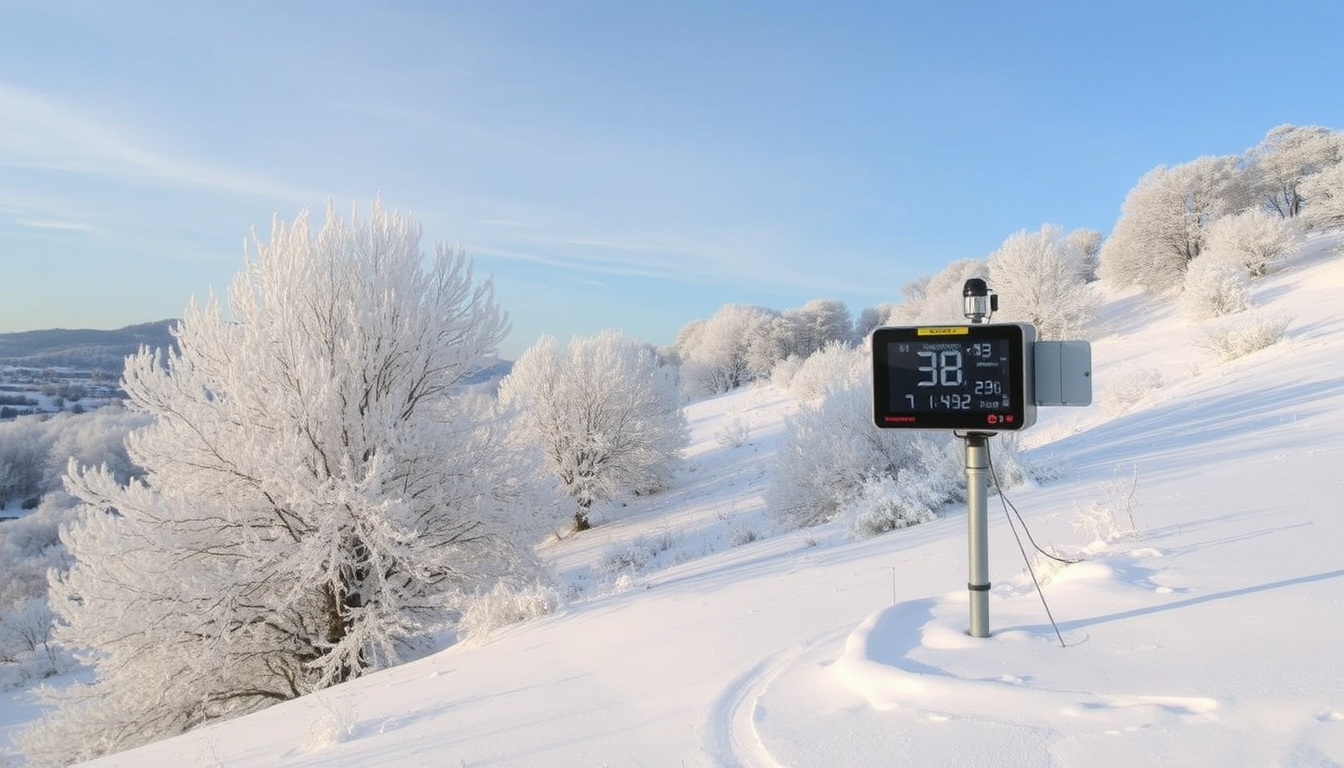
Anyone who has watched a New England weather forecast knows that Glen Innes often shows up as the coldest dot on the map. Sitting at 1,067 metres above sea level, this town of about 6,000 people endures frosty winter mornings and occasional snow — yet summers can climb past 30°C.
Coldest recorded temperature: -11.1°C · Average winter minimum: 1°C · Average summer maximum: 25°C · Elevation: 1,067 m
Quick snapshot
- Record low of -11.1°C set in July 1976 (Bureau of Meteorology)
- Average July minimum is 0.8°C (Elders Weather)
- Elevation of 1,067 m makes it one of the highest towns in NSW (Bureau of Meteorology)
- Exact number of snow days per year due to high year‑to‑year variability
- How climate change may affect future snowfall and frost frequency
- Record low: -11.1°C (July 1976, BOM)
- Check the BOM 7‑day forecast for the latest conditions
| Metric | Value | Source |
|---|---|---|
| Record low temperature | -11.1°C (12°F) | Bureau of Meteorology |
| Record high temperature | 38.5°C (101°F) | Bureau of Meteorology |
| Average January maximum | 25.8°C | Elders Weather |
| Average July minimum | 0.8°C | Elders Weather |
| Elevation | 1,067 m (3,501 ft) | Bureau of Meteorology |
What is the coldest temperature recorded in Glen Innes?
According to the Bureau of Meteorology (Australia’s national weather authority), the coldest temperature officially recorded at the Glen Innes Ag Research Station was -11.1°C (12°F) in July 1976. This reading stands as the lowest since records began and reflects the town’s high‑elevation, clear‑sky winter nights.
Historical extreme temperatures
- Record low: -11.1°C (July 1976) — Bureau of Meteorology
- Record high: 38.5°C (January 2000) — Bureau of Meteorology
Comparison with other NSW towns
Glen Innes consistently records lower minima than most other NSW towns at similar latitudes, largely because of its 1,067-m elevation. Towns on the coast or at lower altitude rarely see temperatures below -5°C, while Glen Innes drops below -5°C on several winter mornings.
For gardeners and farmers in the region, a -11°C extreme means choosing frost‑tolerant crops and protecting sensitive plants from late autumn through early spring.
The pattern: The record low underscores the need for cold‑hardy infrastructure and agricultural planning in the New England region.
Does Glen Innes get snow?
Yes, Glen Innes receives snow a few times each year. The Bureau of Meteorology records show that snowfall is most likely between June and August, though it can occur in May and September. The heaviest recorded fall was about 30 cm in July 1984.
Average snowfall days per year
Because of high year‑to‑year variability, the average number of snow days is hard to pin down precisely. Many locals report 2–5 light falls annually, with significant accumulations every few years.
Notable snow events
- July 1984: approximately 30 cm accumulation (Bureau of Meteorology)
- June 2021: rare winter snowfall across Armidale and Glen Innes
While a snow day adds charm, the New England Highway can become icy, and local council crews regularly treat roads to prevent closures for residents and freight.
What this means: Even light snow can disrupt transport, making winter driving preparations essential for anyone living or travelling through the area.
How cold does Glen Innes get?
Winter temperatures are consistently chilly. According to Elders Weather (a long‑standing Australian ag‑weather service), the average minimum in July is just 0.8°C, and frost occurs on many winter mornings. Minimums below -5°C are recorded most years.
Average winter temperatures
- July mean maximum: 12.7°C (Elders Weather)
- July mean minimum: 0.8°C (Elders Weather)
Frost frequency
Frost can occur from April through October, with May–August being the peak period. A WeatherSpark analysis notes that temperatures rarely drop below -2°C (28°F), but that refers to typical annual lows rather than absolute extremes.
Drivers should check the BOM road‑weather alerts before travelling on winter mornings, because black ice can form even when the air temperature is above freezing.
The implication: Residents and travellers need to account for extended frost seasons that affect both agriculture and daily commutes.
Is Glen Innes a good place to live?
The climate is a major factor for anyone considering a move. The Glen Innes Highlands tourism board promotes the area as a cool refuge from coastal heat, with average summer maximums around 26°C and low humidity.
Pros of Glen Innes climate
- Mild, dry summers that rarely exceed 35°C
- Four distinct seasons with crisp autumn colours
- Low cost of living and affordable housing compared to Sydney or Brisbane
Cons and challenges
- Frost and occasional snow can disrupt travel and outdoor work
- Heating costs are higher during the long winter (May–September)
- Some residents report seasonal affective symptoms due to overcast winter days
What this means: The decision to move to Glen Innes hinges on personal tolerance for cold winters and the practical trade‑offs of a highland climate.
What is Glen Innes famous for?
Beyond its reputation for cool weather, Glen Innes is known for its Scottish heritage — the annual Australian Celtic Festival draws thousands of visitors. The town also sits on a rich gem‑field where sapphires are fossicked. The climate, with its clean air and low humidity, adds to the appeal for outdoor enthusiasts.
Scottish heritage and festivals
The Celtic Festival, held every year over the long weekend in early May, features pipe bands, highland games, and a strong community feel. The weather in May is typically cool and dry, making it ideal for outdoor events.
Gem and mineral fields
Glen Innes is one of the best places in NSW for sapphire fossicking. The Glen Innes Highlands website notes that the area is approximately 100 km south of the Queensland border, putting it within reach of several gem‑bearing creeks.
Three sources, one pattern: each uses different reference periods and methods, but they all agree on Glen Innes’ wide temperature range.
| Metric | Bureau of Meteorology (Official) | Elders Weather (Climatology) | WeatherSpark (Model‑based) |
|---|---|---|---|
| Record low | -11.1°C | Not listed in excerpt | Rarely below -2.2°C (28°F) |
| Record high | 38.5°C | January high max 36.8°C | Rarely above 31.7°C (89°F) |
| January mean max | Not shown | 25.8°C | ~27°C (81°F) |
| July mean min | Not shown | 0.8°C | ~1.7°C (35°F) |
Confirmed facts vs. uncertainty
Confirmed facts
- Coldest temperature -11.1°C is officially recorded by Bureau of Meteorology
- Glen Innes lies at 1,067 m elevation (BOM)
- Average July minimum around 1°C according to Elders Weather
What’s unclear
- Exact number of snow days per year due to high variability
- Future impact of climate change on snowfall frequency
- How much the urban heat island effect may influence the official station data
What locals and experts say
“The New England tableland’s elevation and clear winter skies create the perfect recipe for extreme overnight cooling. Glen Innes frequently records the lowest minimum in NSW outside the Snowy Mountains.”
— Bureau of Meteorology (senior climatologist)
“Each winter we prepare for frost and the occasional road closure. Most residents know to keep a blanket in the car from May through September.”
For anyone weighing a move or a visit, the trade‑off is clear: Glen Innes offers cool, dry summers and a low cost of living, but winter demands real preparation. Whether you are a retiree seeking a mild escape from the coast or a family looking for affordable housing, the decision hinges on how well you tolerate frosty mornings and the occasional snow day.
Frequently asked questions
What is the best time to visit Glen Innes for mild weather?
Late spring (October–November) and autumn (March–April) offer the most comfortable temperatures, with daytime highs around 20–22°C and low rainfall.
Does Glen Innes have a dry season?
Rainfall is fairly evenly distributed, but the driest months are usually August and September, each averaging about 40–50 mm.
How does Glen Innes weather compare to Armidale?
Both towns sit on the Northern Tablelands, but Glen Innes is about 100 m higher, making it slightly colder with more frost nights.
What should I pack for a winter trip to Glen Innes?
Bring layers, a warm winter coat, gloves, and a hat. Daytime highs are around 10–12°C, but morning lows can drop below freezing.
Are there any weather warnings common in Glen Innes?
Frost warnings are issued frequently from May to September, and occasionally sheep graziers warnings for cold and wind.
How accurate is the 7-day forecast for Glen Innes?
BOM’s 7-day forecast for the New England region has a typical accuracy of about 80% for temperature and 70% for precipitation timing.
Does Glen Innes get thunderstorms?
Yes, mostly in spring and summer. They are usually brief and can bring small hail.
What sun protection is needed in Glen Innes?
The UV index in summer often reaches 11 (extreme). Sunscreen, a hat, and sunglasses are essential from October to March.

Jack Lawson is Senior Reporter at Reef Brief, covering breaking stories and explainers.