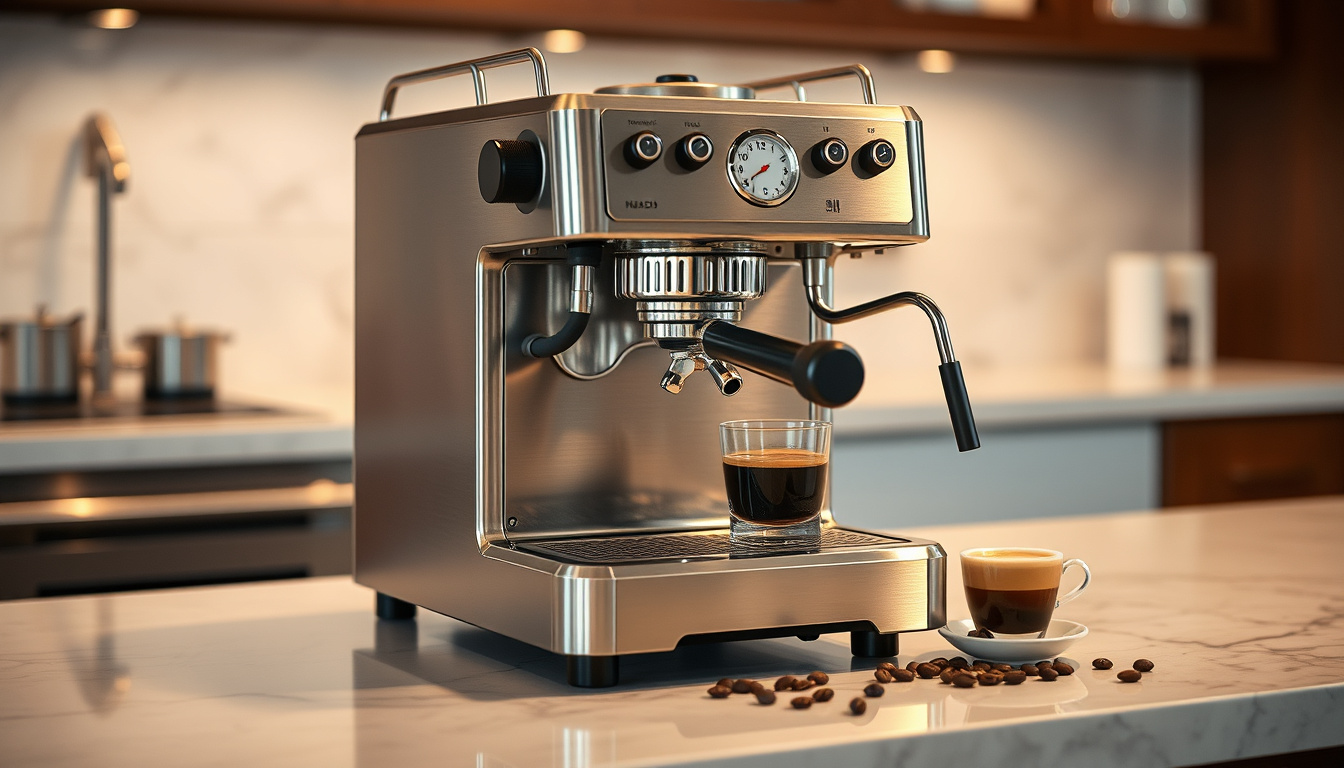
Anyone who has ever priced a serious home espresso setup has run into La Marzocco. The Italian name carries a reputation that borders on reverence among baristas, and the price tags — often starting above $4,000 — raise an obvious question: what exactly are you paying for? This guide walks through the brand’s models, costs, ownership structure, and real-world trade-offs, so you can decide whether the investment fits your countertop and your expectations.
Founded: 1927 ·
Headquarters: Florence, Italy ·
Price Range: $3,000 – $30,000 ·
Owned by: De’Longhi Group (since 2013) ·
Manufacturing: Handmade in Florence ·
Popular Model: Linea Mini
Quick snapshot
- Founded in 1927 by Giuseppe and Bruno Bambi (Wikipedia)
- Acquired by De’Longhi Group in 2013 (La Marzocco Home)
- Home models range from $4,500 to $6,600+ (La Marzocco Home)
- Exact global market share not publicly broken out
- Future model release timeline unannounced
- The “Rolls‑Royce of coffee machines” label is anecdotal, not official
- 1927: Company founded in Florence
- 1970: First dual‑boiler machine introduced
- 2013: De’Longhi acquisition
- 2020: Launch of Linea Micra home model
- Further home‑focused models expected as at‑home espresso grows
- Potential new features in connected app ecosystem
| Attribute | Value |
|---|---|
| Founded | 1927 by Giuseppe and Bruno Bambi |
| Headquarters | Florence, Italy |
| Owner | De’Longhi Group (since 2013) |
| Manufacturing | Handmade in Florence, Italy |
| Popular Models | Linea Mini, GS3, Linea PB |
| Price Range | $3,000 – $30,000 |
Why Is La Marzocco So Expensive?
Handcrafted Production
- Each machine is hand‑assembled in Florence using commercial‑grade components (La Marzocco Home).
- Skilled technicians build every boiler, group, and frame by hand, a process that limits output and raises labor cost.
Quality Materials
The use of stainless steel dual boilers, copper heat exchangers, and commercial‑grade rotary pumps means the machine can pull hundreds of shots a day for years — but it also means the bill of materials alone is far higher than consumer‑grade alternatives.
Brand Prestige and R&D
- La Marzocco invests heavily in R&D, including PID temperature control and active brewing management (La Marzocco USA).
- The brand’s reputation in specialty coffee shops (where it dominates) feeds a premium perception that sustains pricing.
The implication: the high price reflects not just materials but a decades‑long investment in engineering precision and brand cachet that few competitors match.
Is La Marzocco Owned by De’Longhi?
Acquisition History
De’Longhi acquired La Marzocco in 2013 for an undisclosed sum. The Italian home‑appliance group already owned other premium coffee brands, but La Marzocco was kept as a separate division (La Marzocco Home).
Independent Operation Under De’Longhi
- Manufacturing remains in Florence, Italy — the original factory still produces every machine (La Marzocco USA).
- The brand identity, design team, and service network have stayed distinct from De’Longhi’s mass‑market lines.
What this means: De’Longhi provides financial backing and distribution channels, but the product DNA remains handcrafted Italian.
What Are the Best La Marzocco Coffee Machines for Home Use?
La Marzocco Linea Mini
- Listed at $6,600.00 on the official compare page (La Marzocco Home).
- Dual‑boiler design with PID temperature control; compact enough for home countertops but delivers commercial‑quality steam.
The Linea Mini is the most popular home model, balancing pro‑level performance with a footprint that fits under standard cabinets.
La Marzocco GS3
- Positioned above the Linea Mini — the GS3 MP (manual paddle) offers full pressure profiling (La Marzocco Home).
- Dual boilers and saturated group head for maximum thermal stability.
The GS3 is for serious home baristas who want to dial in extraction curve by curve.
La Marzocco Micra
- Priced at $4,500.00 (La Marzocco Home).
- Slightly smaller footprint than the Linea Mini, with a simplified steam wand for easier home use.
The Micra is the entry point to the brand, designed for owners who want La Marzocco quality without the full‑size commitment.
All three home machines require a dedicated 15‑amp circuit and proper water filtration — a factor many buyers underestimate when planning installation.
What Common Problems Do La Marzocco Machines Have?
Pressure Issues
- Users of the Linea PB have reported pressure stability problems, especially when the machine is used heavily without routine descaling (Prima Coffee Equipment).
- Inaccurate pressure gauges can confuse troubleshooting.
Steam Wand Malfunctions
Hard water can clog the steam wand tip and internal valves, reducing steam pressure. Regular back‑flushing with a cleaning detergent mitigates this, but many owners only discover the issue after performance drops.
Electronic Controller Failures
- Older models (pre‑2015) have been known to develop circuit‑board failures (Prima Coffee Equipment).
- Modern models include updated controllers, but replacement boards can cost $500+.
Most problems trace back to inconsistent maintenance, not manufacturing defects. Regular descaling, water softening, and professional servicing every 2–3 years keep these machines running for 15+ years.
How Does La Marzocco Compare to the ‘Rolls Royce of Coffee Machines’?
La Marzocco vs. Kees van der Westen
- Kees van der Westen machines (e.g., Speedster, Mirage) are hand‑built in the Netherlands with a focus on aesthetic design and shot‑by‑shot flow profiling (My Coffee Stage).
- La Marzocco is known for consistency and durability; Kees puts more emphasis on the visual experience and customizable pressure curves.
La Marzocco vs. Slayer
- Slayer offers single‑group and multi‑group machines with needle‑valve flow control, popular in third‑wave cafes (Your Kitchen Center).
- La Marzocco counters with its GS3 MP, which also enables manual profiling, but the Slayer’s dual boiler and pre‑infusion system are its standout features.
La Marzocco vs. Synesso
- Synesso (also based in the US) uses a similar saturated‑group philosophy but offers more granular control over pressure and temperature zones (La Marzocco USA).
- La Marzocco retains an edge in service network and parts availability — a factor that matters for cafe owners who can’t afford downtime.
The pattern: La Marzocco competes not on flash but on reliability and repairability. For home buyers who want a machine that will still be pulling shots in 2040, that calculus often tips the scales.
Home Models Comparison
Three home models, one trade‑off: the more control you want, the more you pay in price and counter space.
| Model | Price | Boilers | Best for |
|---|---|---|---|
| Linea Micra | $4,500 | Dual | Entry‑level home barista |
| Linea Mini | $6,600 | Dual | Home enthusiast wanting pro experience |
| GS3 | ~$9,500 (retail) | Dual | Advanced pressure profiling |
The catch: stepping up from Micra to GS3 nearly doubles the investment, yet all three share the same dual‑boiler architecture.
Key Specifications
Six specs that separate the home lineup from consumer machines: boiler capacity, pump type, material, and power draw stand out.
| Spec | Linea Micra | Linea Mini | GS3 |
|---|---|---|---|
| Boiler material | Stainless steel (brew + steam) | Stainless steel (brew + steam) | Stainless steel (brew + steam) |
| Pump | Rotary, external | Rotary, external | Rotary, external |
| Power | 15 A / 120 V | 15 A / 120 V | 20 A / 120 V |
| Group head | Commercial saturated | Commercial saturated | Commercial saturated (MP) |
| Dimensions (W×D×H) | 12.5×16×14.5 in | 14×21×15 in | 14×22×17 in |
| Warranty | 2 years | 2 years | 2 years |
Upsides
- Commercial‑grade build quality that lasts 15+ years
- Excellent temperature stability for consistent shots
- Strong resale value — well‑maintained machines hold 60–70% of retail
- Active community and parts availability reduce long‑term cost of ownership
Downsides
- High upfront cost — cheapest home model is $4,500
- Requires plumbing or a large reservoir for serious use
- Steeper learning curve for dialing in pressure and grind
- Some users report pressure fluctuations without rigorous maintenance
Timeline of La Marzocco History
- 1927 – Giuseppe and Bruno Bambi found La Marzocco in Florence, Italy.
- 1970 – Introduction of the first dual‑boiler espresso machine, a breakthrough in temperature stability.
- 2013 – De’Longhi Group acquires La Marzocco; manufacturing stays in Florence.
- 2020 – Launch of the Linea Micra, the brand’s smallest home machine.
Clarity: What’s Known vs. What’s Still Unclear
Confirmed facts
- De’Longhi owns La Marzocco (acquired 2013).
- All machines are still handmade in Florence, Italy.
- Home pricing starts at $4,500 (Linea Micra) and goes up to $6,600+ (Linea Mini).
- Common issues include pressure instability from scale buildup and steam wand clogs.
What remains unclear
- Exact market share vs. competitors like Slayer and Kees van der Westen.
- Future product roadmap — no official word on new models beyond current lineup.
- Whether the “Rolls‑Royce” comparison is marketing hype or a genuine product attribute — it varies by who you ask.
The acquisition by De’Longhi has allowed us to grow our distribution while keeping the soul of the company in Florence.
– Guido Bernardinelli, CEO of La Marzocco (quoted on brand’s site)
La Marzocco machines are the workhorses of specialty coffee. They aren’t flashy, but they pull shot after shot with consistency that cheaper machines can’t touch.
– James Hoffmann, coffee expert and author
La Marzocco remains the benchmark for reliability in the espresso world, but the premium price demands a clear use case. For the home barista who plans to own their machine for a decade or more, the total cost of ownership can actually undercut cheaper models that need frequent repairs. The catch: you must be willing to invest in proper water filtration and regular maintenance. For cafe owners, the decision is simpler — La Marzocco’s service network and parts availability mean less downtime, which translates directly to revenue.
If you’re building a home coffee setup, you might also explore our guide to Caffe e Cucina, an Italian-inspired approach to coffee service. For broader kitchen appliance context, our roundup of best toaster and kettle sets in 2025 covers complementary countertop gear.
För den som överväger en La Marzocco-maskin finns en detaljerad genomgång av La Marzocco Linea Micra test som belyser teknik och prissättning.
Frequently asked questions
What is the warranty on a La Marzocco machine?
Home models come with a 2‑year warranty covering parts and labor. Extended service plans are available through authorized dealers.
How often should I descale a La Marzocco?
Every 3–6 months depending on water hardness. Use only manufacturer‑recommended descaling solutions to avoid damaging the boilers.
Is La Marzocco better than Rocket Espresso?
Rocket machines offer comparable build quality at a lower price point (e.g., R58 $2,000–$3,000), but La Marzocco’s saturated group head and service network give an edge in consistency and long‑term support.
Can I use a La Marzocco at home?
Yes — La Marzocco Home division offers three models purpose‑built for residential use. They require a 15‑amp circuit and space for plumbing or a reservoir.
What is the difference between Linea Mini and Micra?
The Micra is smaller, less expensive ($4,500 vs. $6,600), and has a simpler steam wand. The Linea Mini has a larger boiler and slightly more steam power, ideal for milk‑based drinks.
How to maintain a La Marzocco machine?
Daily: back‑flush with water. Weekly: back‑flush with cleaning detergent. Monthly: inspect and clean the steam wand tip. Annually: replace seals and check pressure calibration.
Do La Marzocco machines work with standard countertops?
The Micra and Linea Mini fit under standard kitchen cabinets (15 inches high or more). The GS3 requires about 17 inches of clearance. All three need a dedicated outlet.
For the home barista in the US, the choice is clear: if you want a machine that will outlast your kitchen remodel, the Linea Mini or Micra represents a decade‑plus investment in espresso that no pod machine can match. If you’re a cafe owner, the Linea PB or GS3 ensures your baristas can work without equipment hiccups — and that consistency is what keeps customers coming back.

Priya Tran leads fact-checking, source verification and corrections at Reef Brief.