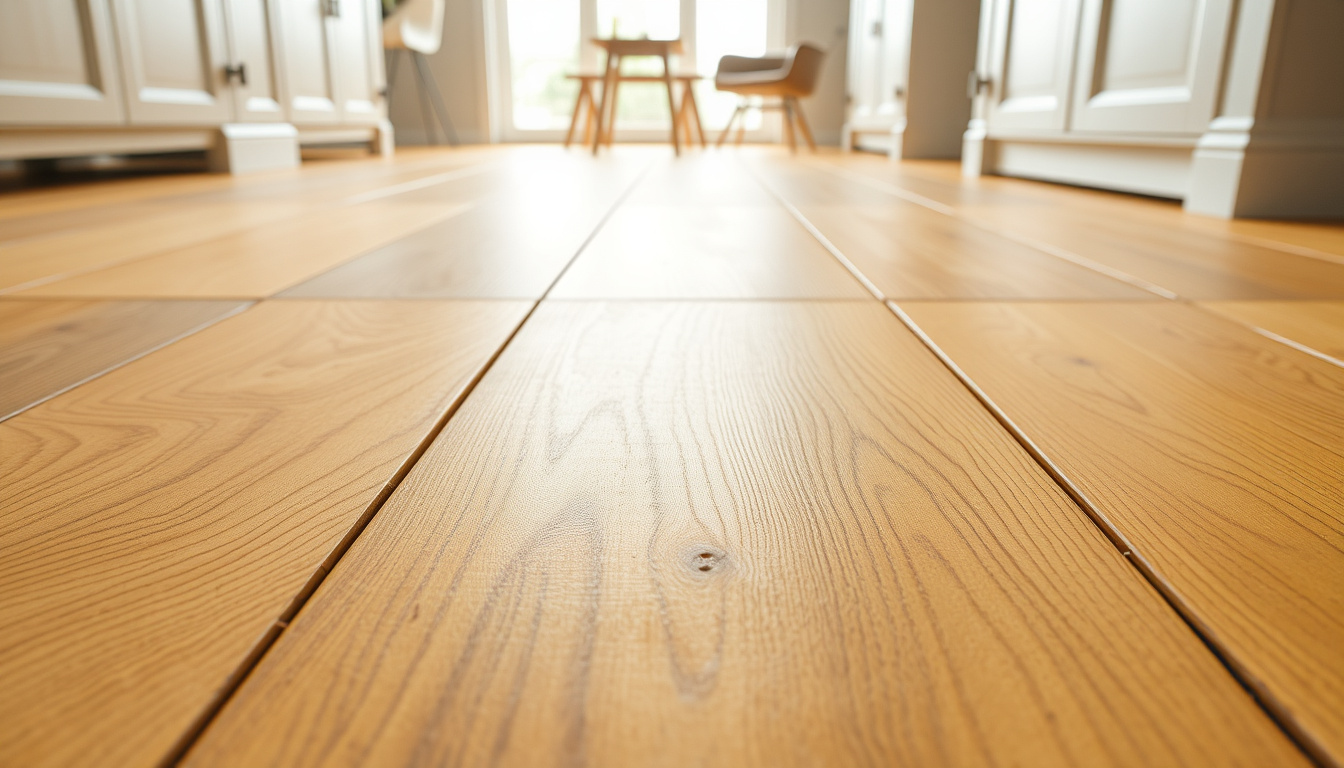
If you’ve torn open a wall in an older Australian home, you’ve probably spotted it: a pale sheet with a distinctive yellow edge running across the floor joists. Yellow Tongue flooring is the workhorse subfloor material hiding under carpets, tiles, and vinyl in millions of Australian homes. This guide breaks down what builders and renovators actually need to know: where Yellow Tongue excels, where it falls short, and how it stacks up against Red Tongue and plywood.
Material Type: Particleboard · Common Size: 2400 x 1200 mm · Key Feature: Yellow edge tongue for alignment · Primary Use: Subflooring · Durability Note: Resin-enriched surface
Quick snapshot
- Yellow Tongue is high-density particleboard with tongue-and-groove edges (Canterbury Timbers)
- Used as structural subfloor over joists for carpet, tiles, vinyl, floating timber (Canterbury Timbers)
- Standard subfloor installs in 8-10 hours (Porta)
- ATFA guidelines set subfloor tolerance at ≤3mm over 3m (Easparquetry)
- Exact pricing varies significantly between suppliers and regions
- Long-term fade resistance data for the yellow coating not publicly documented
- Product established as trusted Australian subfloor since pre-2020s
- Industry standards from ATFA continue to guide installation practices
Key facts
| Property | Details |
|---|---|
| Material | Compressed wood particles with resin binder |
| Edge Feature | Yellow wax-coated tongue and groove |
| Standard Dimensions | 2400 x 1200 mm |
| Typical Thickness | 19mm |
| Acclimation Required | 48 hours before installation |
| Availability | Bunnings, Bowens, specialist timber suppliers |
The table above covers the core specifications builders need before ordering and installing Yellow Tongue.
What are the disadvantages of yellow tongue flooring?
Moisture sensitivity issues
Yellow Tongue is particleboard at its core, which means sustained moisture exposure causes swelling and warping. Direct mopping or water spills left untreated lead to damage. Concrete subfloors require a moisture-resistant vapour underlay before Yellow Tongue installation to prevent moisture from below (Canterbury Timbers). Wet areas like bathrooms and kitchens need vapour barriers and sealed joins, or builders should specify Red Tongue instead (Canterbury Timbers).
Weight and handling challenges
The 2400 x 1200 mm sheets at 19mm thickness are heavier than equivalent plywood sheets. Two-person handling is standard, and DIY installers often struggle with maneuvering the boards into tight spaces. Common mistakes include skipping moisture barriers (causing swelling and warping), neglecting levelling (leading to gaps and movement), and omitting expansion gaps (Canterbury Timbers).
Skipping vapour barriers on concrete or failing to seal joins in wet areas leads to swelling, warping, and premature failure — many builders underestimate moisture prep.
Bottom line: The cost advantage of Yellow Tongue evaporates if moisture protection is skimped — remedial work for swollen particleboard exceeds the original material savings.
What are the benefits of yellow tongue flooring?
Durability and wear resistance
The resin-enriched surface handles daily foot traffic without cracking or wearing through quickly. Yellow Tongue provides exceptional durability and moisture resistance with less warping than traditional timber, making it well-suited to Australian humidity variations (Alpha Timber). The panels interlock smoothly for quick installation and serve as a versatile base for carpet, laminate, tiles, and vinyl (Alpha Timber). With pets and children in the house, the surface holds up well without showing wear patterns.
Cost-effectiveness for subfloors
Yellow Tongue costs significantly less than plywood — approximately 2.5 times cheaper for 19mm thickness on a 160sqm first-floor area (HomeOne Forum). The tongue alignment system reduces installation time: a standard subfloor installs in 8-10 hours, cutting labour costs compared to slab-on-ground pours (Porta). For budget-conscious builds in dry areas, the price advantage is substantial.
Choosing Yellow Tongue for cost savings requires proper investment in moisture management — corners cut on prep work erase the initial price advantage.
Bottom line: For dry-area subfloors where budget matters, Yellow Tongue delivers reliable performance — the price advantage over plywood compounds on larger builds.
What is the difference between yellow and red tongue flooring?
Structural strength comparison
Red Tongue is denser and thicker than Yellow Tongue, providing higher load-bearing capacity. Yellow Tongue offers better sound insulation properties due to its softer composition (Oneflare Blog). ATFA guidelines apply equally to both — subfloor level must not deviate more than 3mm over any 3m span (Easparquetry). If the existing floor exceeds this tolerance, levelling compounds or thicker underlay may be required before installing either product.
Application differences
Red Tongue performs better in moisture-prone and high-humidity areas like bathrooms and kitchens. Yellow Tongue is the preferred choice for bedrooms and living rooms where sound insulation matters more (Oneflare Blog). The colour coding isn’t decorative — it indicates structural rating and moisture tolerance. For ground-level applications or multi-residential builds where moisture risk is higher, Red Tongue or additional waterproofing measures become essential.
Canterbury Timbers (Timber Supplier)Yellow Tongue flooring is one of Australia’s most trusted structural flooring products.
Is yellow tongue good for flooring?
Suitability as subfloor
Yes — for dry-area subfloors, Yellow Tongue performs well as a structural base. Compatible subfloors include concrete slabs (with vapour barrier), plywood (with superior stability), and other particleboard systems. Plywood subfloors offer superior stability and moisture resistance due to their cross-laminated structure, which reduces movement and water damage risk. When preparing for timber flooring over Yellow Tongue or plywood, rough sanding the subfloor surface creates better adhesive bonding (Easparquetry).
Over existing timber boards
Yellow Tongue can overlay existing timber floorboards with proper preparation. The particleboard composition makes it lightweight and affordable for timber frame or raised floor applications. Before installation, the existing timber must be clean, level, and structurally sound. Yellow Tongue improves sound insulation and thermal control when installed over a proper subfloor, adding comfort benefits beyond structural support.
Easparquetry (Flooring Specialist)The final timber floor covering will only be as good as its underlying subfloor.
Bottom line: Yellow Tongue works as an overlay where existing timber is sound and level — the subfloor quality determines how the finished floor performs.
Can you mop yellow tongue flooring?
Maintenance and cleaning
Direct mopping is not recommended — the particleboard core absorbs water through the surface and edges. A well-sealed Yellow Tongue surface handles sweeping and vacuuming without issues (Timber Central). For deeper cleaning, a barely-damp mop with immediate drying works, but standing water must be avoided. DIY installation is manageable with basic tools like a tape measure, drill, and scraper, though professionals are recommended for precise cutting and fitting (Oneflare Blog).
Waterproofing methods
Applying a quality sealant improves moisture resistance on particleboard floors significantly (Melbourne Timber). In wet areas — bathrooms, kitchens, ground-level applications — vapour barriers and sealed joins are essential for durability. Sealing the tongue-and-groove edges before installation provides additional protection against moisture ingress at the joints. For bathrooms, some builders use 6mm tile underlay over Yellow Tongue as an extra moisture barrier.
Yellow Tongue is designed as a subfloor — always install floor coverings (carpet, tiles, vinyl) over it. The yellow surface is not a finish layer and will wear if left exposed.
Bottom line: Keep Yellow Tongue dry — a barely-damp mop with immediate drying works for cleaning, but standing water causes irreversible swelling.
Yellow Tongue vs Red Tongue vs Plywood
Three materials dominate Australian subfloor construction. Here’s how they compare across the features that matter most on site.
| Feature | Yellow Tongue | Red Tongue | Plywood |
|---|---|---|---|
| Material | High-density particleboard | High-density particleboard | Cross-laminated wood veneers |
| Typical thickness | 19mm | 19mm (denser) | 12–19mm |
| Primary use | Dry area subfloors | Wet/high-traffic areas | Universal subfloors |
| Moisture resistance | Moderate (needs protection) | Higher | Superior (cross-laminated) |
| Sound insulation | Better | Standard | Standard |
| Cost (relative) | 2.5× cheaper than plywood | Mid-range | Higher |
| Weight | Heavier than plywood | Standard | Lighter |
| DIY difficulty | Easier (tongue alignment) | Standard | Moderate |
| Termite protection | Available (STRUCTAflor) | Available | Treated options |
For Australian homeowners, the choice narrows quickly based on location and budget. Yellow Tongue wins on cost in dry areas. Red Tongue wins in moisture-prone zones. Plywood wins where long-term durability outweighs price concerns.
Installation Steps
Laying Yellow Tongue correctly requires following a sequence. Skipping steps causes problems that are expensive to fix later.
- Acclimate the sheets: Store Yellow Tongue flat in the installation area for 48 hours before fitting. This allows the material to reach ambient humidity and temperature, preventing post-installation movement (Melbourne Timber).
- Prepare the subfloor: Check level tolerance — ATFA guidelines specify no more than 3mm deviation over 3m. Concrete slabs need moisture-resistant vapour underlay. Plywood subfloors should be clean and dry.
- Plan the layout: Stagger the 2400 x 1200 mm sheets in a brick pattern rather than aligning all joints. This distributes loads across multiple joists and reduces weak points.
- Cut and fit: Mark cut lines carefully, accounting for expansion gaps at walls and around pipes. Use a fine-tooth saw blade to minimise chipping of the particleboard surface.
- Secure to joists: Fasten with screws or nails at each joist intersection. Drive fixings flush but avoid over-driving, which compresses the particleboard and weakens the hold.
- Seal and protect: Apply sealant to all joins and edge penetrations. In wet areas, install vapour barrier tape over all seams before applying floor coverings.
- Install floor covering: Carpet, tiles, vinyl, or floating timber can be installed directly over properly prepared Yellow Tongue.
Porta (Manufacturer)A standard subfloor can be installed in as little as 8 to 10 hours.
The implication: labour cost savings over poured concrete are real — but only if the prep work is done correctly.
Pros and Cons
Upsides
- Durable resin surface resists wear and cracking
- Yellow tongue edge enables easy alignment during installation
- Affordable subfloor option — 2.5 times cheaper than plywood
- Excellent sound insulation properties compared to alternatives
- Smooth, level surface for various floor coverings
- Termite-treated variants available (STRUCTAflor)
Downsides
- Moisture sensitivity requires careful protection measures
- Heavier than equivalent plywood sheets
- Limited suitability for wet areas without additional prep
- Particleboard core can swell if water penetrates
- Yellow surface not designed as finished floor — requires covering
The pattern: Yellow Tongue works best where moisture is controlled and cost matters — wet areas demand either Red Tongue or additional waterproofing investment.
Related reading: Man Cave Garage Ideas · Floating TV Unit Guide
Yellow tongue flooring depends on precise tongue-and-groove joints, best mastered through this tongue and groove installation guide for seamless subfloor results.
Frequently asked questions
What goes under yellow tongue flooring?
Yellow Tongue installs over joists or existing subfloors. On concrete slabs, a moisture-resistant vapour underlay goes between the concrete and Yellow Tongue. On timber frames, Yellow Tongue fastens directly to joists. For timber flooring finishes, the Yellow Tongue surface may need rough sanding to improve adhesive bonding.
Should we add yellow tongue to existing timber floorboards?
Yes, Yellow Tongue can overlay existing timber boards if the underlying structure is sound, level, and free of rot. The existing boards provide the subfloor; Yellow Tongue creates a fresh, level surface for new floor coverings. Clean and secure the existing timber before laying Yellow Tongue sheets.
Where to buy yellow tongue flooring like at Bunnings?
Yellow Tongue is stocked at Bunnings Warehouse stores nationwide. Specialist timber suppliers like Bowens, Canterbury Timbers, and Timber Central also carry the product, often with better availability on bulk orders and expert advice for specific applications.
Is yellow tongue flooring suitable for wet areas?
Yellow Tongue is not ideal for direct wet exposure without underlay or waterproofing. Bathrooms and kitchens need vapour barriers, sealed joins, and ideally floor coverings that protect the subfloor. For wet areas, Red Tongue provides better moisture resistance, or specify additional waterproofing measures when using Yellow Tongue.
What are yellow tongue flooring suppliers?
Major Australian suppliers include Bunnings (national retail), Bowens (VIC/NSW), Canterbury Timbers, Timber Central, and Porta. STRUCTAflor, a termite-treated variant, is available through Porta and specialist distributors. Prices vary by region and order volume.
How much does yellow tongue flooring cost?
Yellow Tongue is approximately 2.5 times cheaper than equivalent plywood per sheet at common thicknesses. Exact pricing varies by supplier, region, and order volume. Check with Bunnings, Bowens, or local timber merchants for current rates in your area.
For Australian homeowners choosing a subfloor material, the decision comes down to three factors: the room’s moisture exposure, the project budget, and long-term durability expectations. Yellow Tongue delivers reliable performance in dry areas at a price point that makes sense for cost-conscious builds. Wet areas demand either Red Tongue or proper waterproofing investment — cutting corners there leads to costly remediation. The subfloor is never seen once finished, but its quality determines how the floor above it performs for decades.

Priya Tran leads fact-checking, source verification and corrections at Reef Brief.