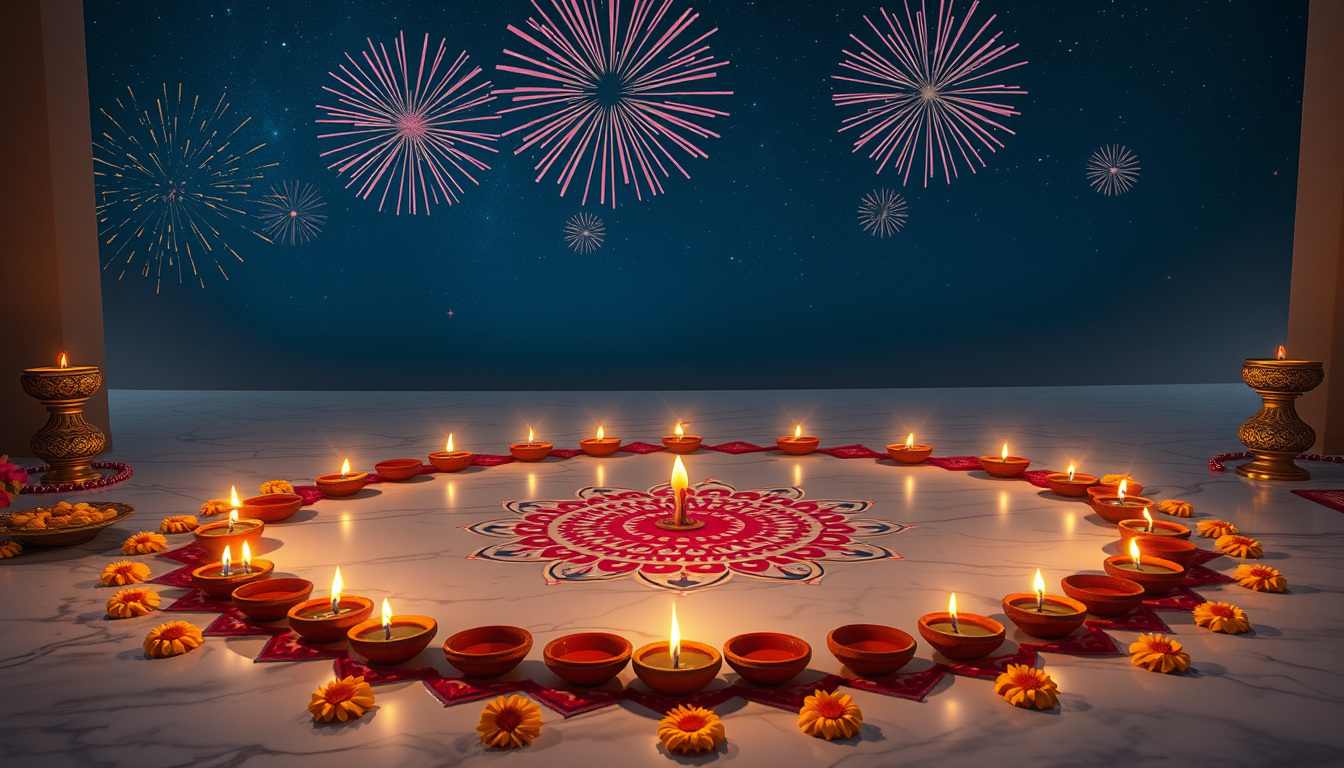
Happy Diwali 2025 falls across a five-day celebration from October 18–23, with the main festival day split between October 20 and 21 depending on regional calendar traditions — a timing split that trips up even experienced observers. This guide resolves the date debate, maps each festival day with verified rituals, and delivers ready-to-use wishes and quotes for family, friends, and social media posts. The main Diwali date in India is October 20, 2025, though regional calendars and diaspora traditions may observe the celebration on October 21 instead.
Diwali 2025 Start Date: October 18 · Key Pre-Diwali Day: October 19 (Naraka Chaturdashi) · Main Diwali Debated Dates: October 20 or 21 · Traditional Festival Days: 5 days · Top Search Focus: Wishes and images
Quick snapshot
- Five-day festival runs October 18–23 (BookMyPoojaOnline)
- Lakshmi Puja in New Delhi: 7:08 PM–8:18 PM on October 20 (Radha Krishna Temple)
- “Happy Diwali” works across all regions and audiences (BookMyPoojaOnline)
- Primary day differs by regional calendar: October 20 (India) vs. October 21 (Western/diaspora sources)
- Tithi-based timing shifts which day families observe as “main” Diwali
- Amavasya Tithi spans October 20–21, triggering the date split
- South India treats October 19 as the main day; North India treats October 20 as main
- Verify which calendar your family or regional tradition follows before October 18
- Source your greetings and images now — search volume spikes in the final week
Five key data points define the Diwali 2025 landscape across Indian and diaspora traditions.
| Field | Value |
|---|---|
| Festival Name | Diwali / Deepavali |
| 2025 Start | October 18 |
| Duration | 5 days |
| Primary Theme | Lights and prosperity |
| Greeting | Happy Diwali / Shubh Deepavali |
What are Diwali days in 2025?
Diwali in 2025 runs as a five-day festival, and the exact days depend partly on which regional calendar you follow. Here’s the structure most commonly cited across Indian sources.
Dhanteras on October 18
Dhanteras opens the celebration on Saturday, October 18, 2025 — the day associated with wealth and prosperity. Traditional activities include buying gold or silver, thorough home cleaning, and setting up the first diyas. JKYog spiritual organization describes it as the ritual foundation for the festival to come. Those looking to track Dhanteras gold prices may find seasonal fluctuations worth noting before making purchases.
Naraka Chaturdashi on October 19
Sunday, October 19 brings Naraka Chaturdashi — also called Chhoti Diwali. In South India, this is the main Deepavali day, marking Lord Krishna’s victory over the demon Narakasura. Rituals include an oil bath (Abhyang Snan) before sunrise and the breaking of a karakai (earthen lamp). BookMyPoojaOnline puja services confirms both the date and the regional emphasis.
Main Diwali and beyond
The central Lakshmi Puja falls on October 20 in most Indian calendars, with the muhurat in New Delhi running from 7:08 PM to 8:18 PM per Radha Krishna Temple guidance. Govardhan Puja follows on Wednesday, October 22, and Bhai Dooj closes the festival on Thursday, October 23. BookMyPoojaOnline confirms this five-day sequence for India.
The five-day arc moves from wealth preparations through the central celebration to sibling bonding — a rhythm that holds whether families follow North Indian, South Indian, or diaspora-adjusted calendars.
Is Diwali on 20 or 21 October?
This is the question most readers arriving at this page are actually asking. The honest answer is that both dates appear in reputable sources, and neither is wrong — they reflect different calendar traditions.
Tithi considerations
The confusion comes down to the lunar calendar. The Amavasya Tithi — the new moon day that defines Diwali — begins at 12:11 AM on October 20 and ends at 10:43 PM on October 21 according to BookMyPoojaOnline panchang data. Because the tithi spans both calendar dates, different traditions assign the main celebration to different days. The Times of India (India’s most-read newspaper) explains that the interplay between the lunar and solar calendars is the direct cause.
Regional and tradition-based dates
Most Indian calendars list October 20 as the main Diwali date — five independent sources confirm this interpretation. However, Farmers Almanac American publication lists the main day as Tuesday, October 21, and some diaspora calendars follow that convention. In practice, both dates are observed in different communities.
Families following a North Indian or pan-India calendar should mark October 20 as the main day. Those following a Western or diaspora-adjusted calendar may observe on October 21. South Indian households often treat October 19 (Naraka Chaturdashi) as the primary day. Knowing your tradition resolves the confusion instantly.
What is Diwali and why is it celebrated?
Diwali is the Festival of Lights — one of the most widely observed festivals across India and among the global Hindu diaspora. At its core, it celebrates the triumph of light over darkness and good over evil.
Core significance
The most celebrated story links Diwali to Lord Rama’s return to Ayodhya after 14 years of exile, following his victory over the demon king Ravana. Citizens lit diyas and oil lamps along the way to guide him home — a gesture that became the defining ritual of the festival. Beyond mythology, Diwali carries a universal theme: choosing light, knowledge, and virtue over their opposites, which is why the celebration resonates across communities.
Stories of light over darkness
Lighting diyas and oil lamps physically enacts this symbolic victory. Families gather for prayers, feasts, and the exchange of gifts and sweets. Farmers Almanac lunar calendar reference notes that Diwali follows the Hindu lunar calendar, with dates shifting each year based on the Kartik Amavasya. The festival functions simultaneously as a spiritual observance and a deeply social occasion — a time when families reunite and communities share in the season’s warmth.
Diwali is part spiritual festival, part social ritual. The lighting of lamps is the action that ties both together — and it is the image most associated with the holiday globally. That dual identity explains why both the ritual and the greeting matter to people searching for this topic.
How to wish happy Diwali 2025?
Wishes and images rank as the top search focus for Diwali 2025 — more than any other related term. Whether you’re texting family, posting on social media, or writing a card, here’s how to get it right.
Heartfelt messages
Strong Diwali messages usually include one of three elements: a reference to light, a reference to the person’s well-being, or a personal memory or wish. Radha Krishna Temple greeting collection offers categorized greetings used widely across temples and community groups.
- “This Diwali, may your heart shine with the light of divine love and wisdom.”
- “May the fire of faith burn away all impurities in your heart this Diwali.”
- “Togetherness is the brightest light of all — Happy Diwali to my wonderful family.”
Creative quotes and captions
For social media or a more literary tone, JKYog spiritual organization wish compilations publish templates that work well:
- “Light over darkness, love over hate — Happy Diwali 2025!”
- “A thousand diyas may burn tonight, But your heart’s flame shines more bright.”
- “May the glow of diyas illuminate your path to success and happiness.”
Personalize any of these by adding the recipient’s name or a shared memory. The more specific, the more meaningful — whether it’s for a family group chat or a professional network post. Those seeking lab-grown diamonds for gifting may find they align with the festival’s emphasis on new beginnings and prosperity.
How do Indians say happy Diwali?
The greeting adapts by language, region, and relationship, and knowing a few phrases makes your wishes feel more grounded and respectful.
Traditional phrases
The standard Hindi greeting is “Shubh Deepavali” — meaning “Blessed Deepavali.” In South India and Tamil-speaking communities, “Deepavali Shubham” carries the same meaning. “Happy Diwali” works perfectly well in English and is understood everywhere. Radha Krishna Temple community greetings notes that bhakti (devotion) is often invoked through the greeting itself — phrases that reference the divine or the light carry spiritual weight alongside the warm wishes.
Regional languages and cross-cultural etiquette
Using a regional-language greeting signals cultural familiarity, which is appreciated when directed at people from that community. A brief phonetic guide or translation alongside the phrase shows the effort without requiring fluency. For wishing colleagues or friends outside the Hindu community, “Happy Diwali” is entirely appropriate — Diwali has broad cultural recognition, and greetings are welcome across all backgrounds.
The greeting stays consistent across regions (“Happy Diwali” / “Shubh Deepavali” / “Deepavali Shubham”), but the date of the main celebration shifts by tradition. South India observes the main day a day earlier than North India, and diaspora calendars may add a day before Dhanteras. The greeting itself never needs to change — only the date you mark.
Diwali 2025 day by day
The complete five-day schedule shows how each observance builds toward the central celebration, with timing variations between Indian and diaspora calendars.
| Date | Day | Observance |
|---|---|---|
| October 18, 2025 | Saturday | Dhanteras — gold buying, home cleaning, first diyas lit |
| October 19, 2025 | Sunday | Naraka Chaturdashi / Chhoti Diwali — oil bath, Narakasura rituals |
| October 20–21, 2025 | Monday–Tuesday | Main Diwali — Lakshmi Puja (timing varies by region) |
| October 22, 2025 | Wednesday | Govardhan Puja — Annakut mountain of food offerings |
| October 23, 2025 | Thursday | Bhai Dooj — sibling celebrations and tika ceremonies |
Two patterns emerge from this timeline: the Amavasya tithi spanning October 20–21 drives the dual-date observation, and the five-day arc moves from wealth preparations (Dhanteras) through the central celebration to sibling bonding (Bhai Dooj). Radha Krishna Temple India and diaspora timing reference provides the regional timing sources for this calendar.
Confirmed facts vs. what’s still debated
The split between confirmed information and ongoing debate reflects genuine differences in how calendar traditions calculate the main Diwali date.
Confirmed
- The five-day festival runs October 18–22, with Bhai Dooj on October 23
- Dhanteras begins October 18; dates for pre-festival days are consistent across sources
Unclear
- Which day — October 20 or 21 — is the primary Lakshmi Puja day depends on regional calendar interpretation
- The exact tithi timing shifts which day diaspora and Western calendars assign as “main” Diwali
Regional calendars split on which day the main Lakshmi Puja falls. Most Indian calendars (BookMyPoojaOnline, Radha Krishna Temple, JKYog) place it on October 20. Western sources (Farmers Almanac, CalendarDate.com) place it on October 21. The Times of India astrology desk attributes the split directly to the lunar-solar calendar interplay. South India treats October 19 as the primary day — a tradition so established that it is not a “debate” but a different cultural norm. Some diaspora calendars extend the festival to begin on October 17 (Govatsa Dwadashi), according to Astrojyoti Healing US-specific timing guide.
“The confusion arises from the interplay between the lunar and solar calendars.”
“Light over darkness, love over hate — Happy Diwali 2025!”
Diwali in 2025 works as a cross-cultural celebration where the five-day structure holds steady, but the exact dates split by tradition. The greeting translates across every region — “Happy Diwali” lands in India, Tamil Nadu, and diaspora communities alike — and the ritual of lighting diyas is universal. The only preparation that changes is confirming which calendar your household or family follows before the first day on October 18. For anyone searching “happy diwali 2025” right now, that’s the real action item.
How do I wish someone a happy Diwali?
The most widely used greeting is “Shubh Deepavali” in Hindi or “Deepavali Shubham” in Tamil and South Indian contexts. In English, “Happy Diwali” is perfectly appropriate and understood everywhere. For a more personal touch, add a line about light, blessings, or the person’s well-being — for example, “May this Diwali bring light and warmth to your home.”
What is the best message for Diwali?
The strongest Diwali messages combine warmth with specificity. Radha Krishna Temple and JKYog both offer categorized compilations — family greetings tend toward emotional and prayerful tones (“Togetherness is the brightest light of all”), while captions for friends or social media can be shorter and lighter (“Light over darkness, love over hate”).
Why do Diwali dates differ between India and diaspora calendars?
The Amavasya Tithi (new moon) spans October 20–21, and different calendar traditions calculate the main day differently. Most Indian calendars assign October 20, while Western publications like Farmers Almanac and diaspora-adjusted calendars often list October 21. South India typically observes the main celebration on October 19 (Naraka Chaturdashi) instead. The Times of India explains this lunar-solar interplay directly.
How to download Happy Diwali 2025 images?
Stock image platforms offer the widest selection. Adobe Stock lists over 46,000 Diwali-themed assets for both personal and commercial use. Freepik provides free vectors and photos that work well for social media posts and digital greetings.
What is Happy Diwali 2025 in Tamil?
The Tamil greeting is “Deepavali Shubham” — “Blessed Deepavali.” In Tamil script, it reads as தீபாவளி சுபம். South India typically celebrates Naraka Chaturdashi on October 19 as the main Deepavali day, a day earlier than the North Indian tradition.
What are unique Deepavali 2025 quotes?
Strong quotes go beyond “Happy Diwali” to capture the festival’s meaning. “A thousand diyas may burn tonight, But your heart’s flame shines more bright” (published by JKYog spiritual organization) works well for cards and social posts. For a more universal tone, “May the glow of diyas illuminate your path to success and happiness” works across formal and informal settings.
Can we say happy Diwali to non-Hindus?
Yes, and it is widely done. Diwali functions as a cultural celebration in many communities, and greetings are exchanged across faiths without issue. If you are unsure whether a colleague or friend observes the festival, “Happy Diwali” is a neutral, welcoming choice that carries no religious assumption.
While festivities span October 18-21, the Diwali 2025 schedule guide clarifies Lakshmi Puja timings and whether the main day falls on the 20th or 21st.

Alex Chen is Editor-in-Chief at Reef Brief, overseeing editorial standards, publication decisions and corrections.