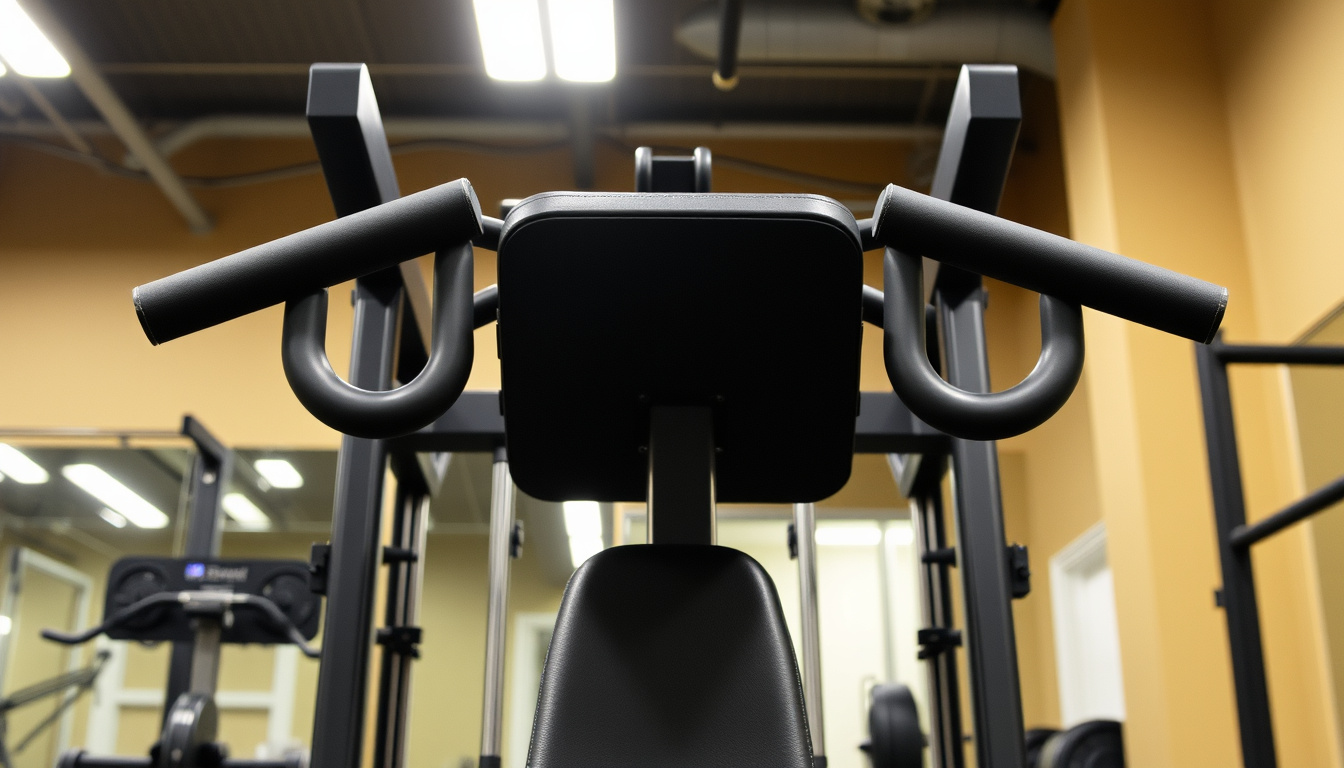
If you’ve ever loaded up a barbell for overhead press and felt a twinge in your shoulder, you already know why many lifters turn to the shoulder press machine. You’ll get concrete technique steps, evidence-backed pros and cons, and clear guidance on whether it fits your goals.
Weight stack range: 5–200 lbs ·
Seat adjustments: 3–4 positions ·
Primary muscle targeted: Deltoid
Quick snapshot
- Primary target: deltoid (all three heads) (Fitness Volt (exercise science resource))
- Proper seat adjustment prevents shoulder impingement (Skelcore (commercial gym equipment brand))
- Machine provides a fixed path of motion (Garner AE (fitness retailer))
- Whether machine press is superior to free weights for hypertrophy (Mirafit (UK gym equipment specialist))
- Optimal rep range for deltoid growth on machine press (Fitness Volt (exercise science resource))
- Hypertrophy gains typically appear after 8–12 weeks of consistent training in the 8–12 rep range (Fitness Volt (exercise science resource))
- Progress to heavier loads or incorporate dumbbell press for greater range of motion (Mirafit (UK gym equipment specialist))
These specifications show how the machine targets deltoids while accommodating different user setups.
| Attribute | Value |
|---|---|
| Primary muscles | Deltoid (anterior, lateral, posterior) |
| Secondary muscles | Triceps, upper chest (clavicular head) |
| Equipment type | Selectorized or plate‑loaded machine |
| Common grip | Overhand, shoulder‑width apart |
| Recommended rep range | 8–12 reps for hypertrophy (Fitness Volt) |
| Rest between sessions | At least 48 hours (Garner AE) |
| Seat adjustment | Handles should align with shoulders (Skelcore) |
What Is a Shoulder Press Machine Good For?
A shoulder press machine is purpose-built for targeting the deltoid muscles while minimizing the need for balance and core stability. Unlike free weights, the machine locks the movement into a fixed arc, allowing you to focus purely on pushing weight through your shoulders. This makes it especially valuable for lifters who want to isolate the deltoids without worrying about form breakdown.
Are shoulder presses worth it?
- They allow you to push closer to failure with less technique demand (Mirafit).
- Beginners, older clients, and anyone with poor form benefit from the guided path (Skelcore).
- They contribute to upper body strength and, combined with a calorie deficit, can aid fat loss.
Is shoulder press good for fat loss?
Any compound exercise that builds muscle supports fat loss by increasing total daily energy expenditure. The shoulder press machine engages multiple joints and large muscle groups, so it elevates your heart rate and burns calories during your session. However, fat loss ultimately comes from being in a calorie deficit — the machine is a tool, not a solution on its own.
A lifter who wants to grow deltoids without risking shoulder aggravation gets a controlled, repeatable stimulus from the machine. The trade-off: you skip the stabilizer training that free weights demand.
Bottom line: The shoulder press machine is a reliable tool for deltoid isolation and progressive overload, especially for those prioritizing safety. Beginners should start with light loads and focus on proper seat alignment. Advanced lifters can use it as a finisher after free-weight presses.
What Are the Disadvantages of a Shoulder Press Machine?
For all its safety benefits, the machine version of the shoulder press has clear drawbacks. The fixed path limits natural movement variability, and several common missteps can still cause shoulder stress.
What are the pros and cons of a shoulder press machine?
- Con 1: Reduced stabilizer muscle engagement compared to free weights (Muscle & Fitness).
- Con 2: Improper seat adjustment can lead to shoulder impingement (Skelcore).
- Con 3: Restricted range of motion versus dumbbells (Mirafit).
- Pro: Lower injury risk for beginners and those with poor form (Fitness Volt).
- Pro: Allows heavier loads safely due to built‑in stability (Garner AE).
The pattern: you trade stabilizer work for safety and isolation. For a lifter recovering from shoulder issues or a beginner building confidence, that trade‑off often pays off. For experienced lifters chasing full‑range strength, free weights still have an edge.
How To Use The Shoulder Press Machine
Getting the most from the machine means nailing setup and maintaining good form through every rep. Here’s the step‑by‑step.
What is the correct technique?
- Adjust the seat so the handles align with your shoulders (Garner AE).
- Sit with your back flat against the pad and feet planted on the floor.
- Grip the handles at shoulder height, palms facing forward (overhand grip).
- Exhale and press upward until your arms are nearly fully extended, but do not lock your elbows (Fitness Volt).
- Inhale and slowly lower the handles back to the starting position.
What is the correct position?
- Keep your head still, avoiding forward or backward movement to prevent neck strain (Fitness Volt).
- Elbows should travel in a controlled arc — not flare wide and not point forward — to maximize delt engagement.
- Use a hammer grip (palms facing each other) if you want to shift more load to the front delts, though the effect is reportedly modest.
Many users set the seat too high or too low, forcing the shoulders into impingement position. Take the extra 30 seconds to check handle alignment — it’s the single most important safety step.
The implication: taking time to set up correctly pays off in safer, more effective presses.
Can You Do Shoulder Press With a Rotator Cuff Injury?
Rotator cuff injuries demand caution with any overhead movement. The shoulder press machine’s fixed path may be safer than free weights because it reduces the need for stabilizer muscles, but it can still aggravate an existing tear or tendinitis.
What are the worst exercises for the rotator cuff?
- Behind‑the‑neck presses put the shoulder in extreme external rotation and are widely considered high‑risk.
- Heavy barbell overhead presses with poor form also stress the cuff (Muscle & Fitness).
- Any movement that causes sharp pain during the press should be stopped immediately (Fitness Volt).
What are two warning signs of a rotator cuff tear?
- Sudden sharp pain in the shoulder, especially when lifting your arm overhead.
- Weakness or difficulty raising your arm against light resistance.
If you suspect a rotator cuff injury, consult a physical therapist before using any press (Skelcore recommends professional guidance for injury cases). Alternatives such as lateral raises with very light weight may be safer, but always follow medical advice.
What Muscles Does a Shoulder Press Machine Work?
The primary driver is the deltoid muscle, which wraps around the shoulder in three heads. The machine press activates all three, but the anterior (front) head takes the brunt of the load.
What muscle is hardest to grow?
- Primary: Deltoid (anterior, lateral, posterior) (Fitness Volt).
- Secondary: Triceps, upper chest (clavicular head).
- Hardest to grow: The lateral (side) deltoid is often the stubborn head because it receives less direct stimulation from pressing movements unless you incorporate lateral raises.
The machine press does a solid job building overall shoulder mass, but if your goal is capped delts, you’ll likely need to add isolation work for the side and rear heads.
“The shoulder press machine provides stability for controlled movement, making it a good choice for beginners.”
Is a Shoulder Press Machine Suitable for Women?
Absolutely. Women can benefit from the same deltoid development and upper‑body strength gains. The machine’s weight stack usually starts low (often 5–10 lbs), which accommodates lighter starting loads.
Are there specific considerations for women?
- Lower starting weights are typically available; most selectorized machines increment by 5–10 lbs.
- The fixed path helps beginners learn proper pressing mechanics without needing a spotter.
- Seat adjustments should be checked to account for torso length — women may need to move the seat one notch lower than men of similar height.
What this means: the machine removes the intimidation factor and allows progressive overload with minimal risk of form breakdown. Many women find it easier to target shoulders effectively without aggravating the neck or lower back.
Upsides and Downsides of the Shoulder Press Machine
Upsides
- Fixed path reduces injury risk for beginners and those with shoulder concerns.
- Allows heavier loading due to built‑in stability.
- Easy to learn; no spotter required.
Downsides
- Less stabilizer muscle activation compared to free weights.
- Restricted range of motion may limit long‑term hypertrophy gains.
- Improper seat adjustment can still cause shoulder impingement.
What this means: the machine is a versatile tool, but it’s not a complete shoulder solution.
Step‑by‑Step Shoulder Press Machine Workout
- Warm‑up: 5–10 minutes of arm circles, band pull‑aparts, and light dumbbell raises.
- Set the machine: Adjust seat so handles are at shoulder height. Select a weight you can press for 10–12 reps with good form.
- Execution: Perform 3–4 sets of 8–12 reps, resting 60–90 seconds between sets.
- Cool‑down: Gentle door‑frame chest stretch and external‑rotation stretches.
“Muscle activation in the deltoid is comparable between machine and barbell press when using equivalent loads.”
The takeaway: combining machine press with a warm-up and cool-down maximizes safety and results.
Clarity: What We Know and What We Don’t
Confirmed facts
- Shoulder press machine primarily works the deltoids. (Fitness Volt (exercise science resource))
- Proper seat adjustment is critical to avoid shoulder impingement. (Skelcore (commercial gym equipment brand))
- The machine provides a fixed path of motion. (Garner AE (fitness retailer))
- Beginners, older clients, and those with poor form benefit from the guided movement. (Skelcore (commercial gym equipment brand))
What’s unclear
- Whether machine press is superior to free weights for hypertrophy. (Mirafit (UK gym equipment specialist))
- Optimal rep range for deltoid growth with machine press — current evidence points to 8–12 reps, but individual response varies. (Fitness Volt (exercise science resource))
- Whether constant machine use may lead to muscle imbalances due to reduced stabilizer work. (Muscle & Fitness (established fitness magazine))
- Whether the machine targets all three deltoid heads equally. (Fitness Volt (exercise science resource))
- Whether seat adjustment alone prevents all shoulder stress. (Skelcore (commercial gym equipment brand))
The pattern: the machine excels in controlled isolation, but individual factors still influence outcomes.
Summary: Should You Add the Shoulder Press Machine to Your Routine?
The shoulder press machine fills a specific role: it allows you to overload the deltoids with minimal stabilizer demand and lower injury risk. It’s not a replacement for free weights, but it’s an excellent supplement — especially for lifters managing shoulder concerns or those new to pressing. For a lifter in the gym aiming to build safe, measurable shoulder strength, the choice is clear: use the machine for high‑load isolation and keep dumbbell presses for range‑of‑motion work. Skip it if you prioritise rotator‑cuff conditioning.
For those who prefer free weights, the dumbbell shoulder press offers a similar movement pattern with added stabilizer muscle engagement.
Frequently asked questions
What weight should I start with on a shoulder press machine?
Begin with a weight you can press for 10–12 reps with perfect form. Most machines have weight stacks in 5–10 lb increments; start on the light side and increase gradually.
Can a shoulder press machine help with shoulder rehab?
If your physical therapist approves, the machine’s fixed path can provide a controlled environment for light presses. Always follow professional guidance and avoid any movement that causes pain.
How often should I do shoulder press?
Allow at least 48 hours between shoulder sessions. Twice per week is a common frequency for most lifters.
Is the shoulder press machine safer than barbell overhead press?
Yes, for most people. The fixed path and built‑in supports reduce the risk of form breakdown and injury, especially for beginners or those with shoulder issues (Skelcore).
Do I need a spotter on a shoulder press machine?
No. The machine’s design and safety stops make it safe to train alone.
Can a shoulder press machine replace dumbbell shoulder press?
It can partially replace it, but not fully. Dumbbells offer a greater range of motion and challenge stabilizer muscles more. Consider using both for balanced development (Mirafit).
Related reading
- Dumbbell Shoulder Press: How‑To, Muscles Worked, and Benefits
- Best Rotator Cuff Exercises for Strength and Injury Prevention
- Beginner Shoulder Workouts: Build Strength Safely
- Top 10 Shoulder Exercises for Mass and Definition
These articles provide further depth on shoulder training and safety.

Priya Tran leads fact-checking, source verification and corrections at Reef Brief.