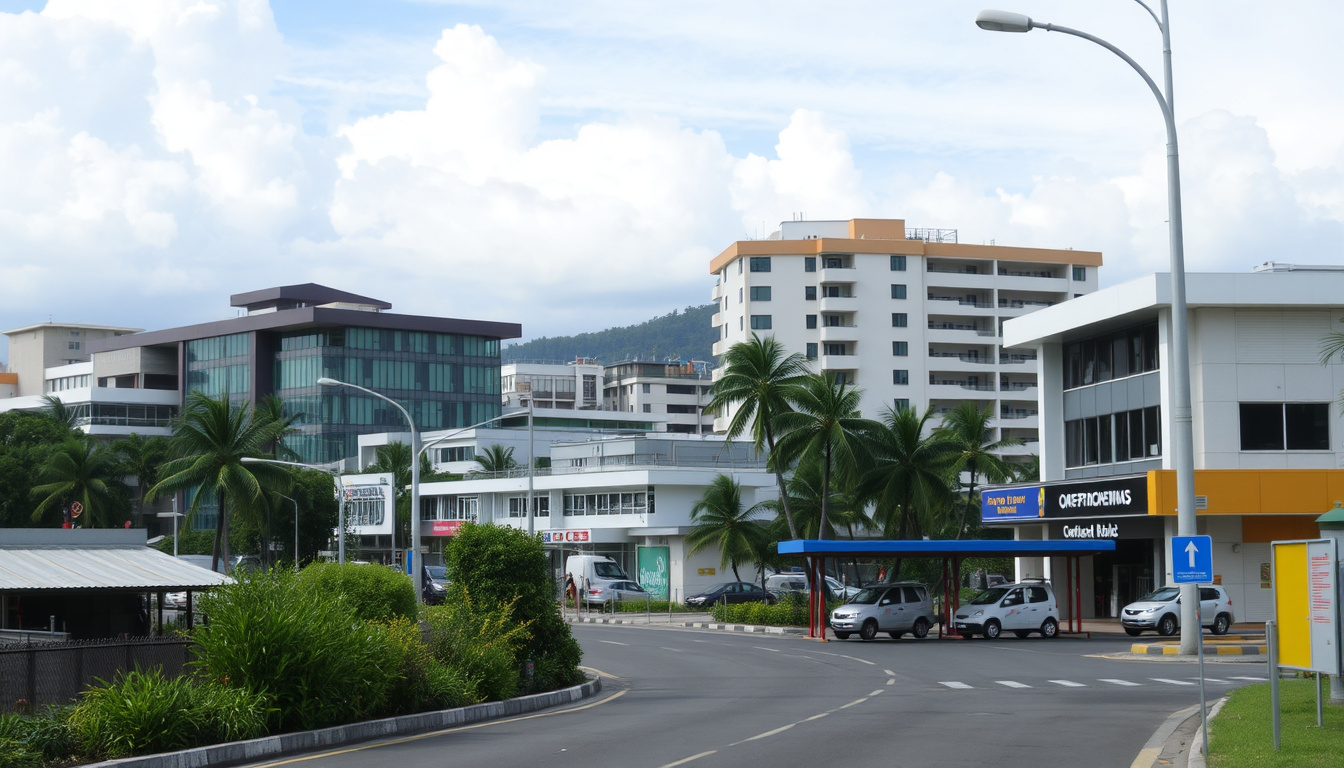
Papua New Guinea holds some of the world’s richest mineral deposits and most diverse cultures — yet it also faces one of the highest crime rates in the Pacific. This guide brings together the latest travel advisories, economic data, and security reports to help you understand what life and travel in PNG really look like in 2025.
Population (2024 estimate): ~10.3 million ·
Capital: Port Moresby ·
Official languages: English, Tok Pisin, Hiri Motu, Sign Language ·
Currency: Papua New Guinean kina (PGK) ·
UNDP Human Development Index (2022 rank): 156 out of 193 countries ·
Global Peace Index (2023 rank): 136 out of 163 countries
Quick snapshot
- Papua New Guinea became independent from Australia in 1975. (Wikipedia)
- It has the highest crime rate in the Pacific region (UNODC data).
- Gender-based violence is endemic: over 60% of women have experienced violence (UN report).
- Exact poverty rate varies by region; national averages mask severe rural/urban divides.
- Level of underreporting of crime is high, so official statistics may underestimate the problem.
- The impact of the Bougainville independence referendum (2019) on future stability is still evolving.
- Independence from Australia: 16 September 1975. (Wikipedia)
- 2024 Human Rights Watch report documents ongoing police violence and corruption (Human Rights Watch).
- Travel advisories from the US and UK remain at high caution levels.
- Bougainville’s independence process and resource revenue sharing will shape political stability.
The table below summarizes key attributes of Papua New Guinea.
| Attribute | Value |
|---|---|
| Official name | Independent State of Papua New Guinea |
| Land border | West with Indonesia |
| Independence from Australia | 16 September 1975 |
| Government | Unitary parliamentary constitutional monarchy |
| Major religions | Christianity (majority), indigenous beliefs |
| Human Development Index (2022) | 0.568 (medium, rank 156) |
What Is the Biggest Problem in Papua New Guinea?
When researchers and journalists rank PNG’s challenges, one theme dominates: lawlessness. The country’s weak institutions, corruption, and inequality create a breeding ground for violent crime and tribal conflict.
Crime and lawlessness as a primary issue
The Human Rights Watch World Report 2024 (international human rights organization) documents police abuses, tribal violence, and a lack of accountability. The UK Foreign, Commonwealth & Development Office (UK government travel advice) says there is a high risk of serious crime in Port Moresby, Lae, and Mount Hagen.
Weak governance and corruption
Papua New Guinea ranks among the world’s most corrupt countries on the Corruption Perception Index (Transparency International). Bribery and nepotism are common in public services, eroding trust in the state.
Economic inequality and poverty
Despite its natural resource wealth, roughly 40% of the population lives below the poverty line, according to the World Bank (international development institution). The gap between the urban elite and rural majority fuels resentment and crime.
Billions of dollars in mineral revenue flow through PNG each year, yet the state lacks the capacity to turn that wealth into public safety or basic infrastructure.
The pattern: lawlessness is not a standalone crisis but a symptom of deeper institutional failure.
Was Papua New Guinea Part of Australia or Indonesia?
The colonial history of New Guinea is often misunderstood. The short answer: PNG was never a state of Australia, but it was administered by Australia for decades. The western half of the island became part of Indonesia.
Colonial history: German New Guinea and British New Guinea
In 1884, the southeastern part of the island became a British protectorate, while the northeast was claimed by Germany. The border between the two roughly followed today’s boundary with Indonesia.
Australian administration after World War I
After Germany’s defeat in World War I, the League of Nations mandated German New Guinea to Australia. The Territory of Papua (British) was also transferred to Australian control in 1906. Australia administered both territories until independence.
Independence in 1975 and border with Indonesia
Papua New Guinea gained full independence from Australia on 16 September 1975. The western half of New Guinea — now the Indonesian provinces of Papua and West Papua — has been under Indonesian control since the 1960s, a border recognized under international law.
Bottom line: The consequence: PNG’s colonial past directly determines its present-day border and identity.
The implication: PNG’s border and colonial legacy continue to shape its national identity and regional tensions.
Is Papua New Guinea a Rich or Poor Country?
PNG is a paradox: a resource giant that struggles to deliver basic services to its people.
Natural resource wealth
The country hosts some of the world’s largest gold and copper mines, including Lihir (Newcrest) and Porgera. It also exports significant quantities of oil and natural gas — the PNG LNG project alone accounts for a large share of GDP.
Low GDP per capita and high poverty
Despite these riches, GDP per capita sits at around $2,900 (World Bank 2023), making PNG a lower-middle-income country. Approximately 40% of the population lives below the poverty line.
Inequality and limited infrastructure
Most roads outside major towns are unpaved. Electrification rates are among the lowest in the Pacific. The UNDP’s Human Development Index ranks PNG 156th out of 193 countries — a score that reflects poor health and education outcomes.
Resource revenue concentrated in the hands of a few, combined with a weak state, means the average citizen sees little benefit from the country’s mineral wealth.
The catch: resource wealth does not automatically translate into prosperity for the majority.
Is Papua New Guinea Safe for Tourists?
This is the most common question from potential visitors — and the answer requires nuance. The risk is real, but with careful planning, travel is possible.
Crime risks in urban areas
The U.S. Department of State (U.S. government travel advisory) currently advises reconsider travel due to crime, civil unrest, and piracy. Violent crime — including sexual assault, carjackings, and home invasions — is common. The advisory notes that criminals have attacked resorts popular with foreign tourists.
Travel advisories from government sources
The UK FCDO (UK government travel advice) similarly warns of high risk of serious crime in Port Moresby, Lae, and Mount Hagen. The U.S. advisory identifies Central Bougainville and most of the Highlands region (except Mt. Hagen and Goroka) as do-not-travel zones.
Precautions for travelers
Both advisories recommend avoiding walking or driving at night, avoiding local taxis (PMVs), and staying away from demonstrations. Police presence is limited outside Port Moresby.
You can experience world-class diving, trekking, and cultural festivals — but only if you accept the need for constant security awareness and a willingness to avoid entire regions.
What this means: safety in PNG requires active risk management, not passive hope.
Why Is Papua New Guinea’s Crime Rate So High?
The drivers are interconnected: rapid urbanization, high unemployment, weak policing, and a tradition of tribal conflict.
Causes: urbanization, unemployment, tribal conflicts
Migrants flood into Port Moresby and Lae in search of work, but jobs are scarce. Many unemployed young men join gangs known locally as raskols. Tribal warfare in the Highlands adds another layer of violence.
Ineffective policing and corruption
Police are under-resourced and often corrupt. The Human Rights Watch (international human rights organization) report details cases of police using excessive force and being involved in criminal activity themselves.
Historical and social factors
Centuries of inter-clan warfare and a weak colonial state left PNG with a tradition of settling disputes through violence. Land ownership remains a flashpoint, especially in resource-rich areas.
Is Papua New Guinea a Nice Place to Live?
For expatriates and locals alike, the answer depends heavily on where you live, your income, and your tolerance for risk.
Cultural diversity and community life
PNG is one of the most culturally diverse places on earth — over 800 languages are spoken. Festivals like the Mount Hagen Show and Goroka Show attract visitors from around the world. Community ties are strong, especially in rural areas.
Economic opportunities and challenges
Mining, oil, and gas companies offer high salaries for expat workers, but the cost of living is high and imported goods are expensive. For locals, the informal economy dominates and formal job opportunities are limited.
Quality of life indicators
Access to healthcare, education, and clean water is poor outside major towns. The UNDP Human Development Index (UN development agency) ranks PNG 156th, reflecting low life expectancy and literacy rates.
Bottom line: Expatriates with employer-provided housing, security, and health insurance can enjoy a unique cultural experience. For the average Papua New Guinean, daily life is a struggle against poverty and violence.
The consequence: for expats, the trade-off is between professional opportunity and personal security.
Upsides
- Rich cultural diversity with over 800 languages and vibrant festivals.
- Abundant natural beauty — diving, trekking, and biodiversity unmatched in the Pacific.
- High earnings potential in mining and energy sectors for skilled expatriates.
- Warm, community-oriented social life outside urban centers.
Downsides
- Extremely high violent crime rate, especially in cities and the Highlands.
- Weak governance, corruption, and unreliable public services.
- Poor healthcare and education infrastructure outside Port Moresby.
- Travel restrictions and security measures required daily for expats and tourists.
Timeline: Key Events in Papua New Guinea’s History
- 1884: British Protectorate in southeastern New Guinea; German colony in northeastern New Guinea.
- 1906: British New Guinea transferred to Australia, renamed Territory of Papua.
- 1914-1919: Australian forces occupy German New Guinea; League of Nations mandate to Australia.
- 1942-1945: New Guinea Campaign — heavy fighting between Japan and Allied forces.
- 16 September 1975: Independence from Australia; Papua New Guinea becomes a sovereign nation.
- 2024: Human Rights Watch report highlights ongoing human rights issues, including police violence and corruption.
The pattern: PNG’s history shows a cycle of external influence and internal conflict.
Confirmed Facts and What Remains Unclear
Confirmed facts
- Papua New Guinea became independent from Australia in 1975. (Wikipedia)
- The country has the highest crime rate in the Pacific region (UNODC).
- Gender-based violence is endemic: over 60% of women have experienced violence (UN report).
What remains unclear
- Exact poverty rate varies by region; national averages mask severe rural/urban divides.
- Level of underreporting of crime is high, so official statistics may underestimate the problem.
- The impact of the Bougainville independence referendum (2019) on future stability is still evolving.
The implication: the data gap means that perceptions of PNG often rely on anecdotal evidence.
“Police in Papua New Guinea have long acted with impunity, committing abuses including extrajudicial killings and torture, while the government fails to hold them accountable.”
— Human Rights Watch (international human rights organization)
“There is a high risk of serious crime in Port Moresby, Lae, and Mount Hagen. Suburbs of towns and cities can be particularly dangerous.”
— UK Foreign, Commonwealth & Development Office (UK government travel advice)
“With a GDP per capita of around $2,900, Papua New Guinea is a lower-middle-income country, yet nearly 40% of its people live in poverty, reflecting extreme inequality.”
For travelers considering Papua New Guinea, the decision is not about beauty or culture — those are undeniable. It is about whether you can navigate a society where the state’s reach is weak, crime is pervasive, and every outing requires a safety plan. If you go, do so with eyes open: hire a trusted guide, avoid the Highlands, and never walk at night. For expatriates weighing a job offer, the choice is starker: generous compensation in exchange for living inside a security bubble. The trade-off is real, and the consequences of ignoring it can be severe.
epicexpeditions.co, visitnatives.com, facebook.com, safetravel.govt.nz, aardy.com
För en utförligare analys av säkerhetssituationen och ekonomiska utmaningar i landet, läs vår detaljerade guide om Papua Nya Guinea.
Frequently asked questions
What is the capital of Papua New Guinea?
Port Moresby, located on the southern coast of the mainland.
What currency does Papua New Guinea use?
The Papua New Guinean kina (PGK).
Is Papua New Guinea part of Africa?
No, it is an island nation in the South Pacific, northeast of Australia.
Who colonized Papua New Guinea?
The eastern half was colonized by Britain and Germany in 1884, later administered by Australia. Indonesia colonized the western half.
Does Papua New Guinea share a land border with Australia?
No. PNG shares a land border only with Indonesia (the island of New Guinea).
What languages are spoken in Papua New Guinea?
English, Tok Pisin, Hiri Motu, and Papua New Guinean Sign Language are official. Over 800 indigenous languages are spoken.
What is the best time to visit Papua New Guinea?
The dry season (May to October) is best for most travel, though the Highlands can be visited year-round.
Is Papua New Guinea safe for solo female travelers?
Government travel advisories warn that violent crime, including sexual assault, is common. Solo female travelers face heightened risk and should exercise extreme caution.
The takeaway: these FAQs address the most common queries, but travelers should consult official advisories for the latest information.
Related reading
- Sky Garden London: Free Tickets, Worth It & Visitor Guide 2025
- Best Places to See Cherry Blossoms: Top Destinations Worldwide
The intention: these articles provide additional context for Pacific travel planning.

Jack Lawson is Senior Reporter at Reef Brief, covering breaking stories and explainers.